
How to Handle Fourth of July FOMO Without Drinking
June 30, 2026
Grief Isn’t a Straight Line: Navigating the Five Stages Of Grief
August 27, 2026
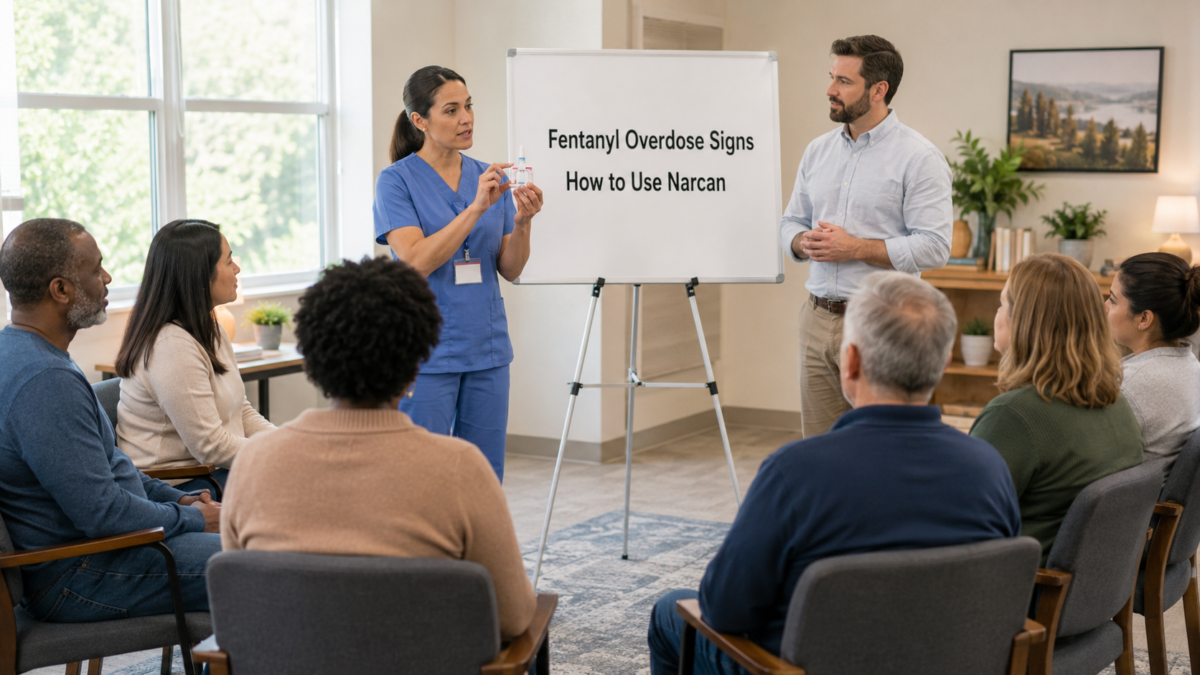
Fentanyl Overdose Signs Every Family Should Know and What to Do
Caring for a person who uses opioids or substances that may contain fentanyl can bring understandable fear about recognizing an overdose in time. Heavy sedation may appear to be ordinary sleep, leaving families uncertain about what was taken or whether immediate help is needed. Knowing the warning signs can provide the confidence to act quickly and potentially save a life.
You do not need to confirm that fentanyl was involved before responding. An opioid overdose can dangerously slow or stop breathing. When an overdose is suspected, acting quickly matters more than knowing exactly which substance was involved.
Knowing the fentanyl overdose signs and having a simple response plan can help you recognize an emergency and take action when someone needs immediate medical care.
Suspect an overdose right now? Give naloxone if it is available, call 911, monitor the person’s breathing, and stay with them until emergency medical help arrives.
What Are the Main Signs of a Fentanyl Overdose?
Fentanyl is a powerful opioid, so a fentanyl overdose generally produces warning signs similar to overdoses involving other opioids. Two of the most important things to assess are whether the person can be awakened and whether they are breathing normally.
Know the Signs:
Possible signs of an opioid or fentanyl overdose include:
- The person cannot be awakened or does not respond to voice or touch.
- Breathing is very slow, shallow, weak, irregular, or has stopped.
- The person makes choking, gurgling, or unusual snoring-like sounds and cannot be awakened.
- Pupils appear extremely small or “pinpoint.”
- The person’s body is limp.
- Lips, nails, gums, or skin appear unusually pale, gray, blue, or otherwise discolored.
- Skin feels cold or clammy.
- The person cannot speak or respond normally.
Not every warning sign has to be present. It is also impossible to determine from symptoms alone whether fentanyl, another opioid, or another substance caused the emergency.
A useful rule to remember: If someone cannot be awakened and is not breathing normally, treat the situation as a medical emergency, and call 911.
Fentanyl Overdose vs. Someone Who Is “Nodding Off”
Opioids can cause significant drowsiness. That can make it difficult for family members to tell whether someone is simply heavily sedated or experiencing a potentially fatal overdose.
Rather than trying to determine exactly what the person took, focus on two questions:
Can you wake them, and are they breathing normally?
| Concerning sign | Why it matters |
| Cannot be awakened | May indicate loss of consciousness |
| Slow, shallow, or abnormal breathing | Major opioid-overdose warning sign |
| Gurgling, choking, or unusual snoring | Breathing may be compromised |
| Blue, gray, or discolored lips or nails | May indicate inadequate oxygen |
When in doubt, respond. Do not lose valuable time trying to prove that fentanyl was involved.
What to Do If You Think Someone Is Overdosing
A suspected opioid overdose requires immediate action. Keep your response as straightforward as possible:
- Try to get a response. Call the person’s name and attempt to wake them.
- Check their breathing. Look for absent, unusually slow, shallow, weak, or otherwise abnormal breathing.
- Give naloxone if available. Naloxone can temporarily reverse the opioid effects suppressing a person’s breathing.
- Call 911. Tell the dispatcher that the person is unresponsive or may be experiencing an opioid overdose.
- Support their breathing. Follow the 911 dispatcher’s instructions. Provide rescue breathing or CPR when appropriate and when trained or instructed to do so.
- Continue monitoring them. Pay close attention to breathing and responsiveness.
- Place them on their side when appropriate. If they are breathing but unconscious, placing them on their side may help reduce the risk of choking.
- Give additional naloxone if needed. Follow the instructions provided with the specific naloxone product.
- Stay with the person. Do not leave them alone, even if they wake up or initially appear to improve.
Do not wait for every possible overdose symptom to appear before acting.
Narcan and Naloxone: What Families Need to Know
Naloxone is a medication that rapidly blocks opioid effects and can temporarily reverse an opioid overdose when administered in time. This includes overdoses involving fentanyl.
Narcan is a brand of naloxone nasal spray. Other naloxone products are also available.
Naloxone may restore normal breathing after opioids have dangerously slowed or stopped it. Some overdoses require more than one dose, particularly when potent opioids such as fentanyl are involved.
Most importantly, naloxone is an emergency medication—not a replacement for emergency medical evaluation. Its effects are temporary, and overdose symptoms may return after a person initially improves.
Naloxone in 30 seconds: If you suspect an opioid overdose, administer naloxone if available and call 911. Continue monitoring the person’s breathing and stay with them until emergency help arrives.
Narcan: How to Use Nasal Spray
Instructions can vary by product, so always follow the directions included with the specific naloxone device you have.
For common single-use nasal naloxone products, the general process is:
- Remove the nasal spray device from its packaging.
- Lay the person on their back.
- Position their head according to the product instructions.
- Insert the nozzle into one nostril.
- Press the plunger firmly to administer the medication.
- Call 911 if emergency services have not already been contacted.
- Watch the person’s breathing and responsiveness.
- If they do not respond adequately—or overdose symptoms return—administer another dose with a new device according to the product instructions.
- Continue monitoring the person until emergency medical help arrives.
Read the instructions for the product you keep at home before an emergency occurs. When seconds matter, familiarity with the device can make it easier to respond.
What If One Dose of Narcan Does Not Work?
Do not assume the situation is hopeless if the person does not immediately wake up.
The immediate goal is adequate breathing, not necessarily instant alertness. Some opioid overdoses require additional naloxone. Follow the repeat-dosing instructions for your particular product while emergency medical assistance is on the way.
Continue monitoring the person’s breathing, follow the 911 dispatcher’s instructions, and do not leave them alone.
Naloxone can buy critical time. It does not replace emergency medical care.
Common Misconceptions About Fentanyl Overdose
Misunderstandings about opioid overdose can cause dangerous delays.
“I have to know fentanyl was involved before giving naloxone.”
You do not need to prove fentanyl was involved before responding to a suspected opioid overdose. If opioid overdose is suspected, naloxone can be administered while emergency help is being called.
“If they’re snoring, they’re probably sleeping.”
Not necessarily. Choking, gurgling, or unusual snoring-like sounds in someone who cannot be awakened can indicate compromised breathing. Do not assume an unresponsive person simply needs to “sleep it off.”
“If Narcan works, the emergency is over.”
No. Naloxone’s effects are temporary. The person can become unresponsive again as naloxone wears off, making continued monitoring and emergency medical care essential.
“One dose of Narcan should always be enough.”
Not every person responds the same way. Additional doses may be needed. Follow the instructions supplied with the naloxone product and guidance from emergency responders.
Why You Still Need Emergency Medical Help After Naloxone
Seeing someone wake up or begin breathing more normally after naloxone can bring tremendous relief. But improvement does not necessarily mean the medical emergency is over.
Naloxone works for a limited period. Opioids may remain active in the person’s body after naloxone begins wearing off, allowing breathing problems or loss of consciousness to return.
That is why you should call 911, continue monitoring the person, and stay with them until emergency medical professionals arrive—even if they become conscious and say they feel better.
Additional naloxone may also be required. Follow the product instructions and directions from emergency personnel.
Don’t leave yet: Improvement after naloxone is a reason to keep monitoring—not a reason to assume the danger has passed.
National Fentanyl Awareness Day is observed on August 21, making this an important time for families and communities to learn about the risks of illicit fentanyl, recognize the warning signs of an overdose, and understand how to respond in an emergency.
Awareness can also open the door to conversations about substance use and treatment. If someone you care about is struggling with fentanyl or other opioids, approaching the conversation with concern rather than judgment can make it easier to discuss professional support and potential next steps.
How Families Can Prepare Before an Overdose Happens
Overdose awareness is most useful when it leads to practical preparation before an emergency occurs.
Families concerned about opioid or fentanyl use can take several steps:
- Keep naloxone somewhere household members can access quickly.
- Make sure more than one person knows where it is stored.
- Read the naloxone instructions before an emergency happens.
- Periodically check the packaging and expiration information.
- Consider having more than one device available in case repeat dosing is necessary.
- Learn CPR and rescue-breathing skills through a recognized training organization.
- Make sure household members know what location information they would provide to 911.
- Discuss overdose risks in calm, nonjudgmental language.
- Learn about professional addiction and mental health treatment options before a crisis occurs.
Consider creating a simple family overdose plan and keeping it near your naloxone. In an emergency, having clear steps to follow can reduce uncertainty and help family members focus on what needs to happen next.
How to Help a Loved One Who May Be Using Fentanyl or Other Opioids
An overdose safety plan can address immediate danger, but families are often dealing with a much larger question: What can we do about the substance use itself?
People searching for information about how to help an addict are often frightened, frustrated, or unsure how to approach someone they love. While “person with addiction” or “person with opioid use disorder” is generally more respectful language, the underlying question families are asking is important.
Whenever possible, have conversations when the person is not intoxicated and there is no immediate medical crisis. Focus on specific behaviors or changes you have observed rather than accusations, shame, or labels.
You can:
- Express concern for their health and safety.
- Listen without turning the conversation into an argument.
- Encourage an assessment from a qualified addiction or mental health professional.
- Keep naloxone accessible even if the person is not ready to pursue treatment.
- Learn about evidence-based treatment options for opioid use disorder.
- Set healthy boundaries around behaviors that affect you or other family members.
- Seek professional or peer support for yourself.
Opioid use disorder is a treatable medical condition. Evidence-based care can include medications such as buprenorphine, methadone, or naltrexone, alongside behavioral and mental health services when appropriate. Treatment should be individualized and overseen by qualified healthcare professionals.
Family members can provide meaningful support, but they cannot personally diagnose, treat, or control another person’s recovery. Professional guidance, realistic boundaries, and support for the family can all play a role.
What to Look for When Comparing Opioid Treatment Options
When exploring professional care, consider whether a provider offers:
- Assessment by qualified, licensed clinicians.
- Access to evidence-based opioid use disorder treatment.
- Overdose-prevention and naloxone education.
- Appropriate medical and mental health services.
- Individualized treatment planning.
- Clear information about levels of care and continuing care.
- Transparent information about insurance and costs.
- Support that treats patients with dignity rather than shame.
The goal should be finding an appropriate level of care for the individual’s clinical needs not simply choosing the first program available.
Frequently Asked Questions About Fentanyl Overdose
- Can You Give Narcan if You’re Not Sure It’s a Fentanyl Overdose?
If you suspect an opioid overdose, you do not need to prove that fentanyl was involved before administering naloxone. Give naloxone if available, call 911, and continue monitoring the person’s breathing and responsiveness.
- Does Narcan Work on Fentanyl?
Naloxone can temporarily reverse the opioid effects caused by fentanyl when administered in time. Because responses vary, additional doses may sometimes be necessary. Follow the instructions for the product you have and guidance from emergency services.
- Can Someone Overdose Again After Narcan?
Overdose symptoms can return after a person initially responds because naloxone’s effects are temporary. This is why calling 911, monitoring breathing, and staying with the person remain necessary even if they initially appear better.
- What Does Fentanyl Overdose Breathing Sound Like?
Breathing may become unusually slow, shallow, weak, irregular, or stop completely. An unresponsive person may also make choking, gurgling, or unusual snoring-like sounds.
These noises should not automatically be interpreted as normal sleep. If someone cannot be awakened and their breathing appears abnormal, treat it as an emergency.
- What Can Families Actually Do to Help Someone With an Addiction?
Families can learn the warning signs of overdose, keep naloxone available, communicate concern without shame, encourage professional assessment, educate themselves about evidence-based treatment, and establish healthy boundaries.
You do not have to solve the entire problem in one conversation. A practical first step can be learning what treatment and support options are available so that you know where to turn when your loved one is willing to accept help.
- The Most Important Thing to Remember
You do not need absolute certainty that fentanyl was involved before responding to a suspected opioid overdose.
If someone cannot be awakened and is not breathing normally, treat it as a medical emergency. Give naloxone if available, call 911, monitor their breathing, follow emergency-dispatch instructions, and stay with them until professional help arrives.
Knowing the fentanyl overdose signs is the first step. Preparing ahead of time—by keeping naloxone available, understanding how to administer it, and knowing whom to call—can help your family respond without losing critical time to uncertainty.
If opioid or fentanyl use is affecting a person you love, compassionate professional support can help your family explore treatment options and take the next step toward healing. You do not have to navigate this journey alone—First City Mental Health Center is here to help you get started today.