

What Is a Mental Health Crisis — and What Insurance Covers When One Happens?
August 24, 2026
Mental Health Treatment in Indiana: How Coverage and Access Actually Work
August 28, 2026
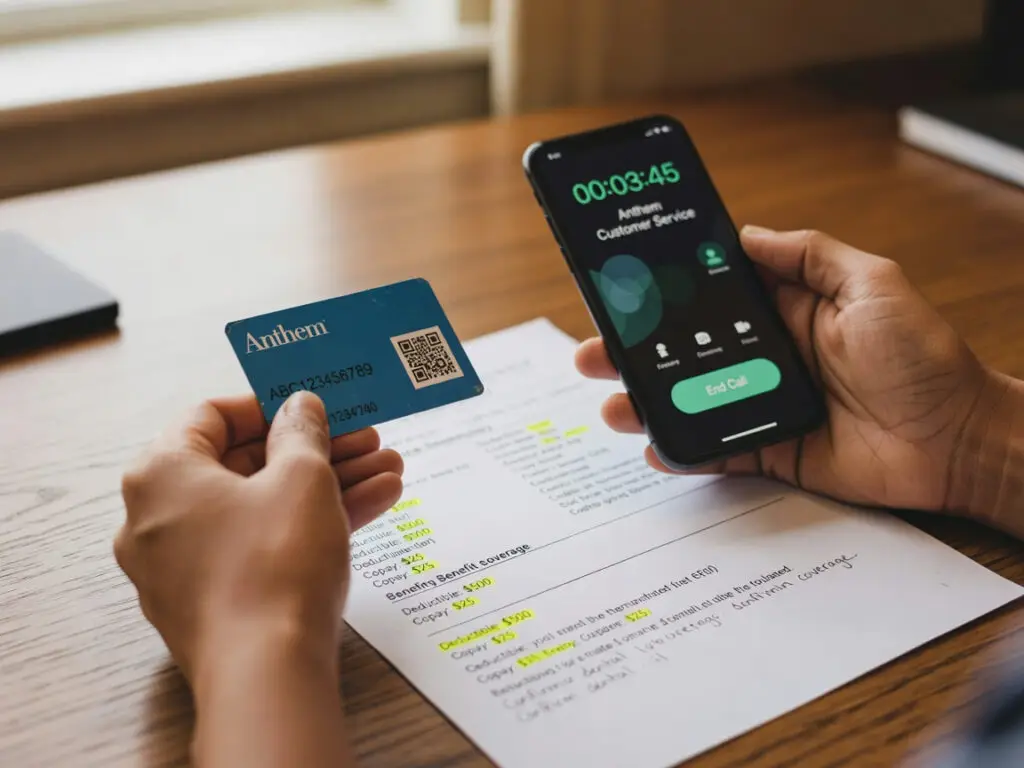
Let me be straight with you: staring at your Anthem insurance card, trying to figure out if it covers your Tuesday therapy appointment, feels a lot like reading a foreign language written in fine print. The truth is, your Anthem card tells you a handful of useful things (your member ID, a phone number, maybe a copay), but it was never designed to answer “will my plan pay for a psychiatrist visit?”
That question lives somewhere else entirely: how to read an Anthem insurance card, buried in your benefit summary or sitting on hold with a Member Services rep.
Key Takeaways
- Your Anthem ID card confirms who you are and how to reach the insurer, not the full scope of your mental health benefits.
- Copay amounts printed on the card don’t account for your deductible, coinsurance, or whether a provider is actually in-network for your specific plan.
- The fastest way to confirm therapy or psychiatry coverage is your Anthem online account, the Sydney Health app, or a direct call to Member Services.
Does my Anthem card show my mental health coverage?
Question: Does my Anthem card show my mental health coverage?
Answer: Not completely. It shows identifying information and sometimes a general copay, but behavioral health benefits, deductible status, and network rules require checking your plan documents or calling the number on the back of the card.
First, Know What Information Is on Your Anthem Insurance Card
Before you can hunt for mental health coverage, you need to know what you’re even looking at. Anthem cards vary a bit by state and by employer group, but most carry the same core fields, and once you know where to look, the card stops feeling like a code you need to crack. Find behavioral health number on the insurance card.
The member ID number sits front and center, usually right below your name. This is the identifier a therapist’s billing staff will ask for when they run insurance eligibility. It’s unique to you, but it doesn’t reveal a dollar figure for anything. Anthem’s own member ID card resource guide describes it as the number tied directly to your coverage record, which is exactly why front desk staff request it before you even sit down.
The group number shows up nearby, and it identifies the employer or organization sponsoring your plan rather than you personally. Everyone on your company’s health plan likely shares that same group number. It matters for claims processing, sure, but it won’t tell you a single thing about what your plan pays for outpatient counseling.
Then there’s the copay, if your card lists one at all. Some Anthem cards print a flat dollar figure next to labels like “PCP,” “Specialist,” or occasionally “Mental Health.” According to guidance from Healthcare.gov’s copayment definition, a copay is simply a fixed amount you pay for a covered service, separate from deductible and coinsurance obligations. The problem: a printed copay doesn’t confirm the service is even covered under your specific plan, and it says nothing about whether your deductible needs to be met first.
Last but arguably most important, the Member Services phone number on the back of the card. This is your actual lifeline. Skip the generic customer service line you find through a Google search and use the number tied to your exact card, since Anthem routes different plans and states through different service lines. The BCBS guide on five things to check on your ID card makes this same point, noting that the alpha prefix before your member ID actually determines which regional Blue Cross Blue Shield entity handles your claims.
| Card information | What it means | Why it matters for mental health care |
|---|---|---|
| Member ID | Identifies your coverage | Providers use it to verify benefits |
| Group number | Identifies your plan or employer group | Helps identify plan-specific rules |
| Copay | Fixed cost for certain services | May hint at your cost, but isn’t the full picture |
| Member Services number | Plan-specific support line | Best place to actually confirm behavioral health benefits |
Can You Tell Your Mental Health Benefits From the Card Alone?
Short answer: no, not really. Longer answer: the card is an identification tool, not a benefits summary, and treating it like one is where people get burned by surprise bills.
Anthem member services mental health depends on a stack of variables that no plastic card could ever hold. Your specific plan matters. Your state matters, since Anthem operates under different Blue Cross Blue Shield licenses regionally and benefit mandates shift accordingly. Whether the provider is in-network matters enormously. The type of service, individual therapy versus intensive outpatient versus residential treatment, changes the math too. And then you’ve got deductible status, coinsurance percentages, and sometimes preauthorization requirements stacked on top.
I’ll be blunt here, because I think this gets glossed over constantly: even confirming your benefits over the phone or through the portal isn’t a guarantee of final payment. Anthem’s own systems note that eligibility checks describe what should happen under your plan’s terms, but the actual claim still goes through review. That distinction, “your benefits say this” versus “your claim paid this,” trips up a lot of people who assumed a phone confirmation was ironclad.
Do: use your card to identify your plan and grab the right phone number. Don’t: assume the copay printed on your card is the entire financial story for a therapy visit.
How to Check Your Anthem Mental Health Benefits
Here’s where the actual homework happens, and honestly, this is the part that saves people from a multi-day bureaucratic mess. My take, and I’ll say it plainly: don’t start by trying to reverse-engineer your coverage from whatever’s printed on the card. Start by getting into Anthem’s own systems, because that’s where the real answers live.
Logging into your Anthem member account is usually the fastest route. Once inside, you can typically look up whether a specific service is covered and get a rough estimate of what you’d owe. The interface differs somewhat depending on whether you’re on an employer plan or a Marketplace plan, so don’t panic if your screen doesn’t match a friend’s.
The Sydney Health app serves a similar function and also stores a digital version of your ID card, which is handy on the rare occasion you’ve left the physical card in a junk drawer somewhere (we’ve all been there). Not every plan gets identical functionality inside the app, so treat it as a convenient starting point rather than a guaranteed one-stop shop.
If digital tools leave you with more questions, call the Member Services number on your card directly and lead with something specific: “I’m looking for mental health care. Can you tell me what my plan covers for outpatient therapy and psychiatry?”
From there, ask whether outpatient therapy is covered, what your copay or coinsurance looks like, whether your deductible applies first, whether you need a referral or prior authorization, whether telehealth sessions are included, and whether out-of-network therapists are reimbursed at all. You can find general contact structures through Anthem’s support center if your card is missing or damaged and you need an alternate way in.
What to Look for When Checking Mental Health Coverage
Once you’ve got someone from Anthem on the phone or you’re staring at your benefits page, a few categories matter more than others.
Therapy and counseling benefits typically cover individual sessions, and often couples or family sessions depending on the plan, plus telehealth appointments in most current Anthem plans. Psychiatry and medication management sit in a slightly different bucket, since prescription coverage often runs through the pharmacy benefit rather than the medical visit benefit, so you may need to verify both separately, especially if the pharmacy routing information on your card applies.
Network status deserves its own attention. A provider “accepting Anthem” is not the same claim as a provider being in-network for your exact plan. I’ve seen this distinction cause real financial pain, so confirm it directly using Anthem’s Find Care search tool rather than taking a provider’s word for it.
| Term | What it means |
|---|---|
| Deductible | Amount you pay before the plan starts covering certain services |
| Copay | Fixed dollar amount for an applicable covered visit |
| Coinsurance | Percentage of the allowed cost you owe after the deductible |
| Out-of-pocket maximum | Cap on certain covered costs during the plan year |
How to Find an In-Network Mental Health Provider
Confirming the benefit is only half the job. Before booking, verify that the provider is actually accepting new patients, treats what you’re dealing with (anxiety, depression, trauma, co-occurring disorders, whatever brought you here), sits in-network for your specific plan, and offers the format you want, whether that’s in-person sessions or telehealth.
If you’re weighing a residential program, something like a First City Recovery Center, treatment center, the same rules apply. Call and confirm network status before assuming coverage extends to a higher level of care.
What to Do If Your Anthem Card Doesn’t Show Mental Health Information
If your card has no line labeled “mental health” or “behavioral health,” don’t read that as a sign you’re uncovered. Most Anthem cards simply don’t itemize every benefit category. Coverage details live in your plan documents and online account, not on a piece of plastic. Check your account, review your Summary of Benefits, or call Member Services and ask specifically for behavioral health benefits rather than general medical coverage.
Questions to Ask Before Your First Therapy Appointment
Print this list or screenshot it before you call:
- Is this therapist in-network for my exact Anthem plan?
- What will I pay for an outpatient therapy visit?
- Does my deductible apply, and have I met it yet?
- Do I have a copay or coinsurance for this service?
- Is there a visit limit on covered sessions?
- Is telehealth covered under my plan?
- Do I need a referral or prior authorization?
The Bottom Line: Your Anthem Card Is the Starting Point
Read the card first, grab your member ID, group number, copay info, and that all-important Member Services number. Then verify your actual mental health benefits through your account, the First City Mental Health Center, or a direct call.
Finally, confirm the provider’s network status and your expected cost before you ever schedule that first session. Your Anthem card gets you in the door, but your plan’s actual terms decide what happens once you’re standing in it.
Frequently Asked Questions
1. Where on my Anthem card do I find my mental health benefits?
Your Anthem ID card doesn’t list detailed mental health benefits; instead, use the “Behavioral Health” or “Mental Health” phone number on the back to call and ask about copays, coinsurance, and deductibles for therapy and psychiatry.
2. What key numbers on my Anthem card do I need before calling about mental health coverage?
Have your Member ID (often with a 3‑letter prefix), Group Number, date of birth, and the policyholder’s name ready—these let Anthem or its behavioral health administrator (e.g., Carelon) pull your exact outpatient and inpatient mental health benefits.
3. How can I tell if my plan uses copays or coinsurance for therapy?
The card usually won’t show this; look for “Behavioral Health” contact info on the back, then call and ask specifically for your outpatient behavioral health copay or coinsurance and whether a deductible applies before benefits start.
4. Do I need prior authorization for mental health services with Anthem?
It depends on your plan and service: emergency care doesn’t require prior authorization, but some outpatient programs (e.g., PHP/IOP) or certain psychiatric services may—check the behavioral health number on your card or your Summary of Benefits and Coverage (SBC).
5. What’s the fastest way to confirm my Anthem mental health deductible and out-of-pocket maximum?
Log into the Anthem member portal or Sydney Health app to view your year‑to‑date deductible and out‑of‑pocket maximum, or call the behavioral health line on your card and ask for your current deductible balance and remaining out‑of‑pocket for in‑network mental health care.